Summary
Sustainable investing, in our view, is simple in its goal, to invest in sustainable earnings and companies, and exclude those whose businesses are considered controversial and unsustainable. We engage a dynamic ESG framework to find exemplars in sustainable practices. It might surprise investors to learn that evaluating the ESG and sustainable profile of companies is an exercise in complexity and subject to dynamic change. The Ausbil Active Sustainable Equity Fund portfolio managers share how investors who embrace this complexity may be better placed to assess long-term sustainability risks and opportunities.Key points
- ESG and sustainability are complex. We take a holistic view to determining the overall ESG / sustainability characteristics of a company.
- With detailed ESG analysis and engagement, we can identify leaders as exemplars, laggards to exclude, and look at momentum over time for those that are in improvement or decline.
- Ausbil’s scoring and research is central to active engagement where we meet, question and challenge companies on ESG progress.
- Active engagement holds it all together, in the actioning of the empirical analysis underpinning our view on any company within our investible universe.
- Sustainable investing seeks to reward companies that demonstrate leadership in sustainable practices on the belief that over time they may reward investors with investment opportunities.
- Ausbil has built over a decade of empirical data based on deep research on the ESG factors for the companies we engage in the ASX 200. This data informs our dynamic sustainability scoring system which helps identify the most sustainable companies in our investible universe.
- Ausbil’s sustainable investment approach is built on genuine engagement with companies alongside data collection and proprietary research, with Ausbil completing approximately 200 ESG related company meetings per annum covering a wide range of ESG issues.
- A sustainable investment strategy that includes companies that are exemplars, leaders or improvers across a spectrum of ESG issues may achieve excess returns over the long-term, while managing sustainability related risks.
Can you describe your philosophy on ESG and sustainability?
The ESG credentials and sustainability of a company are complex. All companies touch on multiple ESG domains, and there is usually never a simple view that captures everything that matters. We believe that it is important to embrace complexity and assess companies holistically on their ESG and sustainability credentials, whether they are improving, how they compare to others, and how they compare to global best practice. It is important to understand that almost every company will show up exceptions or weaknesses, but for us, this is where the real action occurs, where active engagement can make a difference. It is active engagement that holds it all together, in the actioning of the empirical analysis underpinning our view on any company, especially the exceptions.
You say ESG and sustainability can be complex. How do you make sense of this in your assessment of sustainable companies?
Today, we see the assumption in the media and generally that investment and sustainability are obvious decisions, and that sustainable companies fit easily into sustainable investment themes, and others do not. This assumption is not correct, in our view. Yes, there are companies which at the outset we choose to exclude as sustainable investors (weapons, controversial activities and fossil fuels as an example1), but there are many other companies that are leaders in sustainable practices, yet they can go unnoticed because their achievements do not make for simplistic categorisation.Decades of work in ESG and sustainability has shown us that every company’s sustainability credentials, record and outlook is a complicated and changing thing. Rather than ignore this, we believe a philosophical and procedural approach to sustainability should embrace complexity, and that it should support active sustainable investment decisions. You could describe this as taking a holistic view on what is a sustainable company, and what is not.
Can you describe the holistic view you apply to assessing a sustainable investment?
The ESG and sustainability issues that concern us are numerous, diverse and evolving. When we look at a company, we see it through a lens that covers a range of issues and risks (Figure 1), like a detailed web of interrelated ESG factors that all need to be understood and engaged.Figure 1: ESG covers a sustainable web of issues and ideas (% of meetings where issue was raised)

Source: Ausbil for year ended 31 December 2025. *Share of meetings where this issue was raised. The sum of these percentages will exceed one hundred percent because multiple issues can be raised at meetings.
Figure 1 illustrates the active engagement meetings we held across the 2025 calendar year as a sample of the breadth and diversity of complication that underpins our assessment of sustainability.
This view condenses the true depth of complexity that underpins it, but it helps show the proportion of engagement meetings with companies where we raised these ESG issues and asked for an explanation and shared how they may improve their performance. These ESG engagement meetings are the fulcrum for how we seek action and change, and how we ascertain how sustainable each company is in our universe and compared to exemplars. Our ESG and sustainability scoring system mirrors this complexity to help us rank these companies empirically so that we can engage effectively to help them improve any identified sustainability risks.
Can you describe your empirical scoring approach which underpins this company assessment?
We have designed a simple but dynamic scoring system that we have been implementing for almost a decade. We calculate a Sustainability Score by adding together two underlying scores, an Industry Score and a Company Score for each listed company in our coverage. Figure 2 gives a sense of how our Sustainability Scores are distributed, and the potential score ranges.Figure 2: Distribution of Sustainability Scores for the ASX 200

Source: Ausbil, as at 24 June 2026. *Note that 5 companies of the S&P/ASX 200 are not yet rated for this analysis due to index changes at the time of analysis.
Ausbil calculates a Sustainability Score for each company on which we initiate ESG coverage. The Sustainability Score is the sum of two underlying scores for each company, the Industry Score and the Company Score. Industry Score measures how we assess a company’s exposure to sustainability related risks and opportunities. It is scored on a scale of 1 to 5, with a score of 1 denoting an industry that has the biggest sustainability challenges, and 5 being an industry that is contributing positively to sustainability drivers. Industries are diverse, and so are their scores (Figure 3). Company Score also has a range of 1 to 5, with 1 denoting a company demonstrating weak ESG practices, often with major governance and ESG issues, and 5 denoting a company that is demonstrating leading ESG practices relative to peers. Thus, summing these scores to create the Sustainability Score gives a range of between 2 and 10.
Figure 3: Sustainability scoring across key sectors shows diversity by industry

Source: Ausbil, 24 June 2026. *Some companies (5 currently) are yet to be initiated in our ESG coverage due to changes in the index. MSCI Level 1 Sectors.
In order to calculate these scores, we have developed a comprehensive but standardised proprietary scorecard for each company that we maintain dynamically, particularly as we gather primary evidence from our ESG engagement with companies. From Figure 2, it is clear that the Sustainability Score distribution is skewed to the right, meaning that our overall scoring approach is not overly positive and more realistic, giving companies room to develop and improve on their ESG performance.
However, Figure 2 shows the scoring distribution for all companies we cover in the ASX 200, including the companies we exclude because of their exposure to controversial activities or because their Sustainability Score does not meet Ausbil’s sustainability criteria for inclusion in the portfolio (Figure 4). Overall, from our ASX 200 coverage, we have excluded 49 names for the reasons shown in the pie chart, including 29% that are excluded because their Sustainability Score is not acceptable. What remains forms our sustainable investment universe.
Figure 4: Sustainability score distribution after exclusions

Source: Ausbil, as at 24 June 2026. Note that 5 companies of the S&P/ASX 200 are not yet rated for this analysis due to index changes at the time of analysis.
The strategy’s policy is to exclude companies from the benchmark if they demonstrate the following characteristics: a company score of 1.5 or less; or an industry score of 1.5 or less; or a sustainability score of 4 or less; or if they are explicitly on the excluded list due to material exposure to controversial activities regardless of sustainability, company or industry scores.
Exclusion due to poor Sustainability Score. Companies that do not meet Ausbil’s sustainability criteria are filtered and excluded from the investible universe. There are many factors that might contribute to Ausbil’s view that a company does not meet Ausbil’s sustainability criteria, such as companies with poor employee safety and/or workplace practices and companies that Ausbil considers having significant, persistent and unresolved corporate governance issues, conflicts of interest in ownership and/ or poor board structures.
Exclusion for controversial activity. Ausbil’s Active Sustainable Equity strategy has codified a range of ESG exclusions in its investment policy. You can read our exclusions policy here: Controversial Activity Exclusion Policy. Effectively, companies with what we deem to be unacceptable exposure to the following areas are excluded: adult content and adult entertainment, alcohol, animal cruelty, controversial weapons and armaments, conventional weapons and armaments, fossil fuels, gambling, human rights violations, old-growth forest logging, predatory lending, uranium and tobacco and tobacco-based products.
The strategy bases its controversial exclusions on a limit measured as a percentage contribution to earnings before interest and tax (EBIT). Many other sustainable investment strategies in the market base their limits on percentage contribution to gross revenue, which, for a given percentage limit, is a significantly larger tolerance than that used by the strategy. The focus on EBIT or other earnings figures aligns with Ausbil’s investment philosophy, which is focused on earnings growth and earnings sustainability.
The Sustainability Score gives us empirical data points that we can blend with qualitative fundamental ESG analysis to form a view on company sustainability, and on the momentum in their sustainability journey, whether it is improving or in decline. These two elements are then combined with our approach to finding earnings and earnings growth in our integration of ESG in a sustainable investment strategy.
What does a sustainable company look like?
Sustainable companies with high scores on ESG, which are leaders in their markets might sound few and far between, but in a deeply considered and researched sustainable investment strategy, these exemplars are there to be found. To visualise how leaders compare to laggards, in their sector, it helps to visualise the ESG issues, and how these companies perform on each and as a whole. To help visualise company sustainability within a world of complexity, we have developed an ESG Scoring Spectrum. Let’s look at the example of the banks (Figure 5).Figure 5: Ausbil’s ESG Scoring Spectrum: Leader and laggard of Australia’s four largest banks

Source: Ausbil proprietary analysis based on empirical data from our active engagement program with companies as at June 2026.
From Figure 5, we can see that both banks are different on their overall sustainability scores – Yellow is 4 and Blue is 3. This represents the overall scoring differential between the leading bank on ESG scores and the laggard. You can see around the scoring spectrum where both companies excel and where they need to do work. It is also clear from the diagram that there is a consistency in the leader compared to the laggard.
From an ESG perspective, this spectrum helps us engage actively on how both companies can improve on sustainability measures, and where they need to work to maintain forward momentum for improvement.
A high-scoring sustainable company is one where the owners and management have established a business model that goes beyond simply becoming a market leader in its segment but incorporates sustainability considerations in its design and execution. These are companies that ‘pay it forward’ for future generations, for their workforce, for society, for the environment, and for the future sustainability of the economy. These types of companies seem to find a nexus between being profitable and successful and leaving a legacy that is beneficial for society. There is no one industry, but rather many places where we find these companies.
From an ESG perspective, higher-scoring sustainable companies demonstrate leadership in governance and board independence, sustainability practices and transparency, diversity and workplace flexibility, quality risk management and safety, information security and effective staff engagement. Effectively, higher scoring companies operate near ESG scores of 5 across the issues around the ESG Scoring Spectrum.
We look for future income streams that are linked to sustainable thematics, excellent management, a low and reducing environmental impact, controlled risks, low or improving carbon impact, and a long-term, sustainable business model. Higher-scoring sustainable companies also demonstrate a clear awareness and ownership of the social purpose and responsibility in their business, an area of growing importance. Finally, such companies are connected with, and tuned into, the environment in which they exist, the health and wellbeing of the global communities in which they operate, their impact on the environment now, and into the future.
What areas are currently a focus on your sustainability radar?
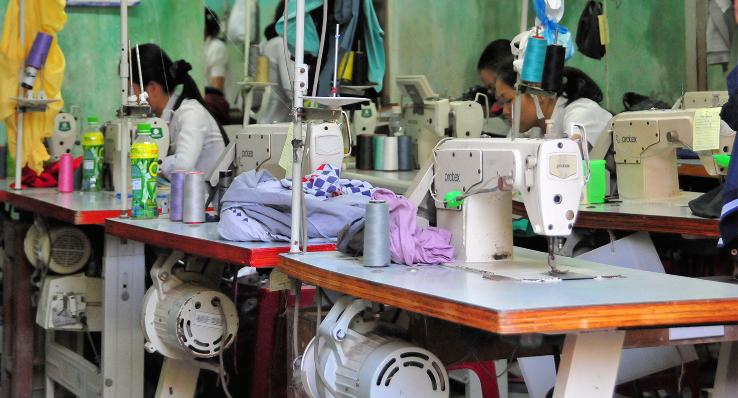
Modern SlaveryModern slavery and human rights in supply chains remains a key ESG engagement issue as it impacts a significant proportion of Australian listed companies. Modern slavery is a complex and multifaceted issue for investors. It is both a human rights concern and a source of financial and systemic risk that investors cannot fully diversify away. However, as global regulatory expectations rise and societal tolerance for exploitation declines, modern slavery may present material implications for earnings sustainability, reputational standing, and long-term investment performance.
According to data, the estimated incidence of modern slavery has been rising, not falling. The shift in people living and working in modern slavery conditions increased from estimates of around 40.3 million in 2016 to 49.6 million in 2021 (ILO/Walk Free/IOM, 2022). This represents a compound annual change of +4.2% across five years, which is a multiple of more than four times the annual world population growth for the same period of +1.0% per annum (World Bank, 2024). The UN Sustainable Development Goals have mandated a target for the eradication of forced labour worldwide by 2030.
Ausbil has developed significant expertise in the area of modern slavery, with our Head of ESG, Mans Carlsson having undertaken field trips across the years with Ausbil and in earlier work, covering supply chains in Hong Kong (2011, 2012), China (2011, 2012, 2016), Bangladesh (2014, 2022), Cambodia (2018, 2019) and Thailand (2019). Field experience has included a return to Bangladesh in 2023 to mark 10 year anniversary of the Rana Plaza tragedy where 1,138 garment workers died due to a building collapse.
Because of the prevalence of modern slavery globally, as a fund manager it would be an impossible task to construct a portfolio that is considered entirely free from the probability of modern slavery risk. Modern slavery is a systemic risk, particularly deep down in company supply chains. As a result, we believe investors can play a role through engagement with individual companies, policy advocacy efforts and collaboration with other institutional investors (such as Investors Against Slavery and Trafficking – Asia Pacific, which Ausbil co-chairs).
In our engagements with companies on modern slavery, we are looking for best practice approaches, and we are asking them to look through their entire supply chains, and the supply chains to their supply chains. Modern slavery is a key risk for companies with a significant numbers of products sourced globally, like Woolworths and Wesfarmers, the owner of Bunnings (Figure 6).
Figure 6: ESG Scoring Spectrum: Woolworths and Wesfarmers

Source: Ausbil proprietary analysis based on empirical data from our active engagement program with companies as at June 2026.
As a consumer facing company, Woolworths (ASX: WOW) has a lot of ESG risks that could impact them from a reputational perspective. Woolworths was the first major company to report that they had actually found cases of modern slavery in their supply chains. Ausbil has assessed Woolworths as demonstrating strong responsible sourcing practices relative to its peers. Our experience has been that the company is approachable and open to ideas on where change can be achieved. One of the strengths we have seen in their approach has been to address the root causes of human rights issues in global supply chains, rather than implement ‘band aid’ solutions. Because Woolworths is such a large company, their improvements on responsible sourcing has also had a ripple effect in the wider economy, which means it has been particularly worthwhile for us to engage on this issue.
Similarly, Wesfarmers (ASX: WES) faces significant consumer scrutiny and deep complexity in their supply chains from the perspective of modern slavery risk. We have engaged with Wesfarmers for many years, similarly with Woolworths, encouraging them to adopt leading practices on identifying and reducing the risk of modern slavery in their supply chains. Wesfarmers has demonstrated adoption of many of those ideas, such as consolidating their supply chain at Kmart to have more leverage over working conditions at supplier level, and mapping their supply chain beyond the first-tier suppliers.
Climate Change
Climate risk is perhaps the peak issue of our time. Yet understanding climate risk, its mitigation and decarbonisation from an investor’s perspective is complex. The science is very clear. The world needs to decarbonise to avoid a potential ecological disaster. The longer we wait, the costlier it will be for the economy, the environment and humankind. We are burning more fossil fuels and increasing food production, all of which generates carbon dioxide, methane and other outputs. The impacts of rising temperatures are compounded by further destructive events like bushfires, droughts, floods and, longer term, by rising sea levels.
Reducing global greenhouse gases, including carbon dioxide (CO2), is key to avoiding the destructive impacts of climate change. The Paris Agreement’s 2015 target is to limit global temperature rises to well below 2 degrees Celsius above pre-industrial levels, and to pursue efforts to limit the temperature increase to 1.5 degrees.
Countries have targets, known as nationally determined contributions (NDCs), to reduce greenhouse gas emissions. Australia, for example, has legislated a target by 2030 to cut emissions by 43% below 2005 levels. But despite these commitments, the world is not on track to reach the 1.5 degrees Celsius global warming target. Based on the current trajectory, the world is on track for a temperature rise in this century far beyond the agreed climate goals (UNEP, 2023).
From an investor’s perspective, rather than simply assessing carbon emissions intensity, which is backwards looking and ignores issues like physical climate change risk, revenue opportunities from decarbonisation and has other potential flaws, we believe that the best way is to assess climate risks through a ‘scenario analysis’ approach. This approach is forward looking and can evolve as assumptions change. We perform this analysis annually through Net Climate Change Risk (NCCR), a proprietary research tool developed by Ausbil’s ESG Team. NCCR is effectively a quantitative model to assess, score and rank climate change risks.
NCCR does not fall into the traps of carbon measurement and estimation that typically arise when using the ‘carbon footprint’ approach. With the carbon footprint approach, intensity is measured by a company’s carbon emissions divided by its revenue. This gives investors a snapshot of the carbon intensity of a portfolio. It does not, however, tell the full story of climate risk. This is because data quality on carbon emissions can be poor, and carbon emissions are only observable on an historical basis. To properly assess a company’s climate change risk, investors need to understand future emission trajectories. Carbon footprint analysis is also limited to looking at the cost side.
The NCCR approach assesses all aspects of climate change to a company’s business model. The model scores companies on climate change risk across a 7-point Likert scale, from -3 (terminal risk) to +3 (significant benefit), with zero being neutral. We analyse three climate change scenarios: 1.5-degree global warming (B2DS); a 2-degree warming scenario (2DS); and warming above 2 degrees (2DS). The analysis is anchored on International Energy Agency (IEA) scenarios for total energy demand and energy mix. It is also complimented by other data and forecasts to ensure that our analysis is meaningful in the broader debate on climate change. Our analysis looks out over three timeframes: 12 months; 5 years; and to 2050, so we can compare to the Paris Agreement net-zero targets.
Importantly, Ausbil’s NCCR approach assesses the credibility of each company’s decarbonisation targets. High-emitting companies displaying little credibility around their climate change targets are assumed to face increased costs from a price on carbon (a key assumption in all the IEA scenarios) and/or costs from purchasing carbon offsets. We expect there will be increased scrutiny into the credibility of offsets too, and we generally assume the price of offsets will increase over time.
In terms of engagement on climate change, two companies we are working with at the moment, and which have shown leadership in this area, are Pilbara Minerals (PLS) and Lynas Rare Earths (LYC) – Figure 7. Both companies are in the critical minerals business, producing lithium (PLS) and rare earths like Neodymium-Praseodymium (LYC), both critical to the energy transition, electrification and battery storage.
Figure 7: The ESG Scoring Spectrum for Lynas Rare Earths and Pilbara Minerals

Source: Ausbil proprietary analysis based on empirical data from our active engagement program with companies as at June 2026.
Pilbara Minerals (ASX: PLS) is a lithium pure play with upstream, midstream and downstream exposures, and is positively exposed to the decarbonisation thematic. However, just because a company has the right ‘exposure’ – in this case, the themes of decarbonisation climate change - does not mean that it is necessarily a good fit for our strategy, though we take a holistic perspective on all the ESG credentials of a company. PLS used to be somewhat of a laggard on general operational ESG risk management, but it is a company with which we have engaged, and where we have seen significant forward momentum on ESG issues. For instance, the company has established a 5-year sustainability plan and has accelerated its decarbonisation / water risk management in recent years.
As a rare-earth miner and processor, Lynas Rare Earths (ASX: LYC) is subject to various supportive demand drivers, for instance customers diversifying away from China, tailwinds for electrical vehicles and renewable energy, climate change and decarbonisation. Like PLS, Lynas Rare Earths is a company that has demonstrated good management of the high operational risks they face in terms of mining rare earths, such as chemicals, runoff, tailings and radioactivity, which reflects well in our overall ESG assessment.
Traditional Owners
An area of particular interest, particularly in the resources sector, is engagement of traditional owners. Engagement with traditional owners was largely ignored by corporate Australia until the 1992 Mabo judgement issued by the High Court of Australia rejected the doctrine of terra nullius, meaning that the land belonged to no one, an assumption on which the original legal rights to land ownership was based. While changes to the laws and legal guidance occurred after Mabo, the acknowledgement and acceptance of legal native title meant that land users particularly resources companies, needed to acknowledge native title rights and negotiate with traditional owners.
The Juukan Gorge incident with Rio Tinto accidentally destroying 46,000-year old indigenous caves and sacred places in 2020 brought this issue into sharp focus for both the community and investors. An outcry from the community and the government underscored the need for more diligent and careful management of sacred sites and for more functional and respectful relationships with traditional owners. Rio Tinto was rightly punished for Juukan Gorge, and at the time, Ausbil was strident in our engagement with the company. However, since Juukan, the positive impact has been a significant improvement across the industry in their relationships with traditional owners. From an ESG perspective, we are encouraged by Rio Tinto’s (ASX: RIO) improved ESG risk management in many areas (Figure 8).
Figure 8: The ESG Scoring Spectrum for Rio Tinto

Source: Ausbil proprietary analysis based on empirical data from our active engagement program with companies as at June 2026.
Following the Juukan Gorge incident in 2020, we engaged extensively with Rio Tinto on community and traditional owner concerns. Following the signing of a memorandum of understanding with the PKKP Aboriginal Corporation (the traditional owner group affected by the Juukan Gorge incident)- a positive milestone - Rio Tinto also expressed their ambition to share co-management with relevant traditional owners at each asset globally. We believe such a move demonstrates leadership and we maintain ongoing engagements with the company about this, especially as it sets a new global standard for structuring relationships with traditional owners.
How do you integrate scoring into your investment approach?
In our investment approach, ESG is integral to how we decide on investments, what we avoid, and in the ongoing re-evaluation process for portfolio companies. We believe the inclusion of ESG in the investment process, supported by well-founded ESG research and engagement, can improve our ability to identify mispriced stocks, assess a company’s earnings sustainability and, ultimately, lead to better-informed investment decisions.While a lot of qualitative research and engagement is undertaken on ESG issues, scoring on ESG with the Sustainability Score provides an empirical approach to quantifying ESG quality and momentum over time for companies. With more quantitative and systematic scoring, we can complement our top-down macro bottom-up fundamental investment process with the integration of scoring. This is achieved through a proprietary tool we use called SEET (Sustainable Earnings Evaluation Tool). Figure 9 illustrates how we apply ESG scoring and SEET to narrow the index into what we evaluate to be a sustainable investment universe.
Figure 9: Placing sustainability and ESG at the heart of the investment process

Source: Ausbil, as at June 2026. more information on the strategy’s Controversial Activity Exclusion Policy can be accessed at www.ausbil.com.au on the Ausbil Active Sustainable Equity Fund product page. The controversial activities exclusion screening applies exclusively to the Ausbil Active Sustainable Equity strategy.
Sustainability Scores and exclusions provide the first steps in refining the sustainable universe. Ausbil takes the investment universe, the S&P/ASX 200 and removes companies subject to long-term earnings sustainability risk, including companies with exposure to controversial activities and companies not meeting minimum ESG hurdles. As shown in Figure 4, sampled as at 24 June 2026 for illustrative purposes, this excluded 49 companies from the ASX 200 universe, 29% of which were excluded on the basis of low Sustainability Scores, and 71% which were excluded on exposure to controversial activities. Excluding 5 names Ausbil was yet to initiate for ESG coverage, this leaves 146 companies in the investment universe.
Sustainability Scores then combined with fundamental conviction to provide the second step. Using the SEET system, Ausbil combines Sustainability Scores with our fundamental equity analysts’ Conviction Scores with equal weighting in order to rank the remaining 146 companies in order of sustainability. SEET effectively ranks the remaining companies on how sustainable they are and by how constructive Ausbil is on their earnings growth outlook.
Sustainable portfolio construction. It is from the SEET ranked companies that Ausbil selects a sustainable portfolio. Under our investment approach, at least 50% of the sustainable portfolio by market-cap must come from the top third (33%) of the companies ranked in SEET. Of 146 companies or so that pass exclusion and scoring, a portfolio of 30 to 40 stocks is selected with names that the data and our research show to be the most sustainable on ESG and earnings growth measures.
How does sustainable investing perform?
In Ausbil’s experience, integrating ESG research has not required a sacrifice of returns, and may indeed enhance both the risk and return sides of the investment coin. We have seen this play out in our sustainable investment portfolio, and that a sustainable approach is intended to help identify and manage certain investment risks, including ESG related risks. Figure 10 illustrates the excess returns the Ausbil Active Sustainable Equity strategy has been able to generate since inception compared to its benchmark (S&P/ASX 200 Accumulation Index).Figure 10: Sustainable performance and the impact of exclusions (net of fees)

Source: Ausbil, FactSet, 30 June 2026. Sustainable Strategy is the performance of the Ausbil Active Sustainable Equity Fund (net of fees) since inception in February 2018. Benchmark is the S&P/ASX 200 Accumulation Index. Benchmark with Exclusions is the S&P/ASX 200 Accumulation Index less excluded companies based on Ausbil’s controversial activities exclusion policy.
Interestingly, the impact of excluding companies is mixed. If you look at passive approaches to sustainable investing that exclude companies as their methodology, the result may not be that much different to the outcome of the benchmark. The cumulative total returns for the Exclusion Index (the benchmark S&P/ASX 200 Accumulation Index without the companies Ausbil has identified as exposed to controversial activities) relative to the Benchmark Iin Figure 10 show that the exclusions do not detract from excess performance over time.
Relatively passive approaches to sustainability based only on exclusions do not make the most of the available alpha tools, as can an active investment approach that takes full advantage of the ESG intelligence that comes from dynamic active engagement with companies.
We can see in the total return performance that the actively managed Ausbil Active Sustainable Equity strategy steadily advances over time against both the index, and a simple exclusion policy which hugs close to the index on compound excess returns.
We think that ESG helps perfect a long-term investment approach as it helps us make investment decisions that look at a kaleidoscope of depleting and terminal risks to a business model that both traditional analysis and simplistic exclusion strategies usually miss. Genuine active engagement means maintaining an ongoing conversation with all companies in the potential investment universe, even when they currently have un-investable ESG scores.
How has the Ausbil Active Sustainable Equity Fund performed?
The theory is one thing, but experience is another. Since establishing Ausbil’s active sustainable equity strategy, the application of deep ESG research has significantly improved the risk-adjusted performance of our sustainable portfolios. We have seen this in examples of controversies and value-depletive companies we have avoided due to ESG research, and also in the avoidance of unforeseen risks that can be identified by an ESG approach, but are hard to quantify.Ausbil’s Active Sustainable Equity Fund has generated a net long-term performance since inception of +9.68% per annum (after fees as at 30 June 2026), compared to the S&P/ASX 200 Accumulation Index return of 8.61% per annum, outperforming the benchmark by +1.06% pa since 31 January 2018 on a net basis (Table 1).
Table 1: Ausbil Active Sustainable Equity Fund – Active ETF (ASX: ASUS) performance (net of fees)

Source: Ausbil as at 30 June 2026. *Annualised return. ^ Proxy benchmark S&P/ASX200 Accumulation Index after exclusions. As at 30 June 2026, the Ausbil Active Sustainable Equity strategy currently deems certain activities and companies with material direct (manufacturing, development, or trading of) or indirect exposure (trading/distribution of or through the value chain eg provision of services/components to a controversial industry) to these controversial activities are excluded from the investible universe of the strategy. As at 30 June 2026, Ausbil deems controversial activities to be fossil fuels, uranium, gambling, alcohol, tobacco, animal cruelty, old growth logging, predatory lending, human rights, controversial weapons and armaments, conventional weapons and armaments, and adult content and entertainment and are subject to change. More information on the strategy’s Controversial Activity Exclusion Policy can be accessed at www.ausbil.com.au on the Ausbil Active Sustainable Equity Fund product page. Past performance is not a reliable indicator of future performance.